
Shopify Tasks Accomplished
From the team you've dreamed of





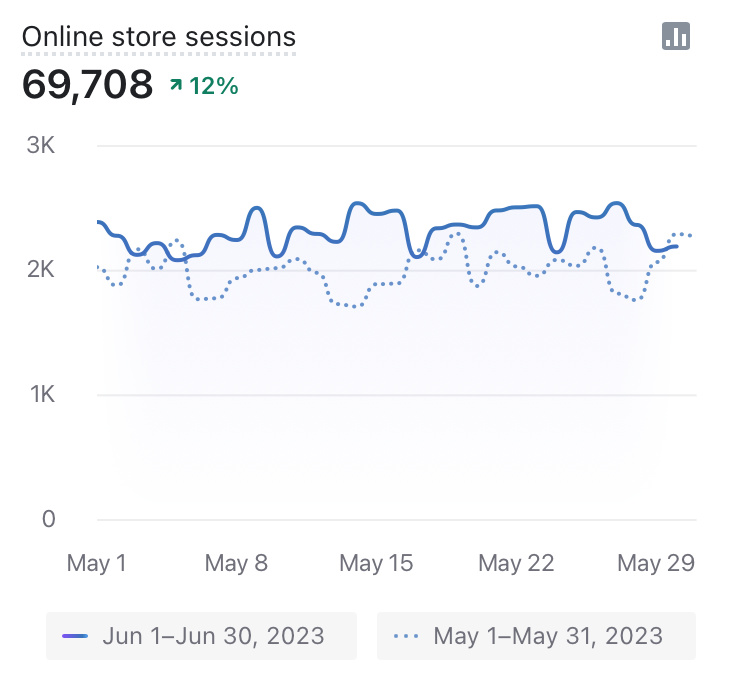
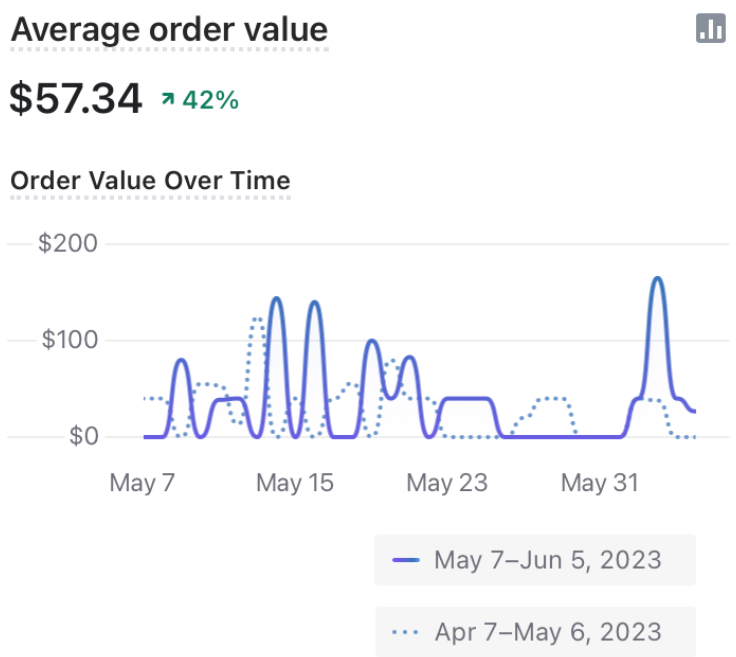
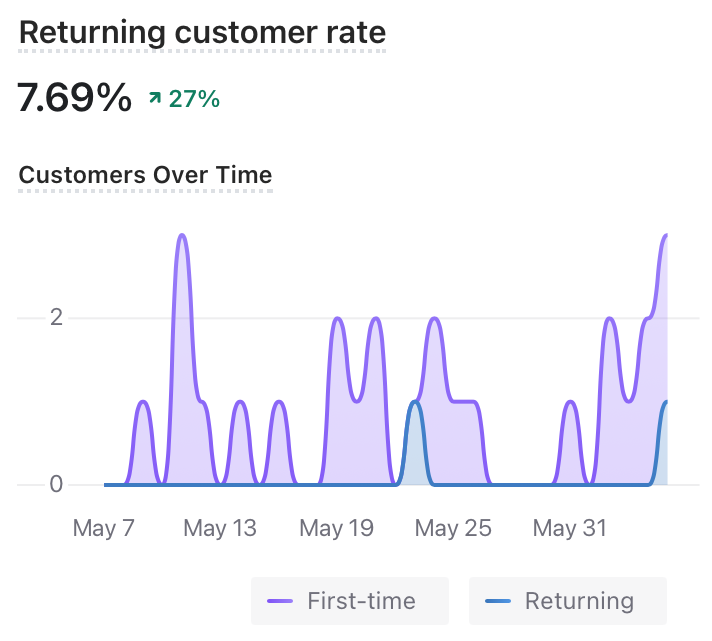
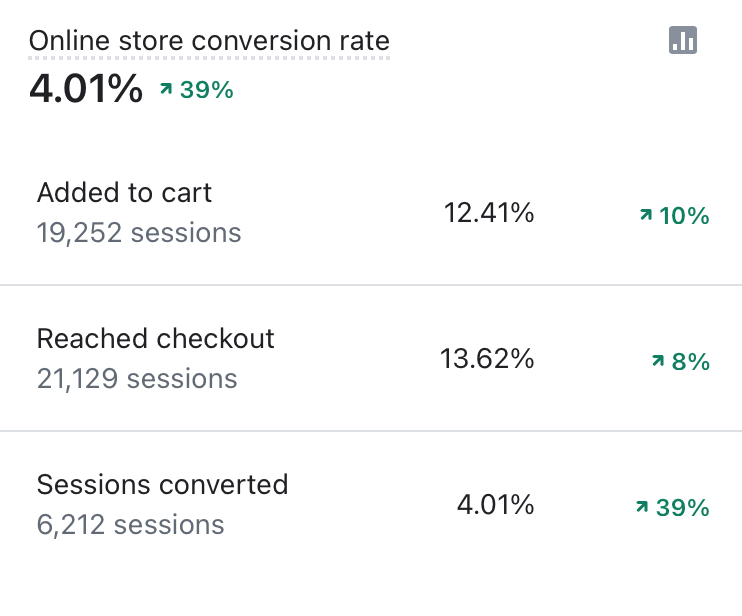
Ideal for starting businesses just starting out


Ideal for small - medium sized businesses
Ideal for medium to large sized businesses

Ideal for starting businesses just starting out
Ideal for small - medium sized businesses
Ideal for medium to large sized businesses
Ideal for starting businesses just starting out
Ideal for small - medium sized businesses
Ideal for medium to large sized businesses




Our team has worked far, wide, and vertically too. With resources and tasks shared across our team, we've optimized our workflows to be the best that anyone has experienced.
We give you an entire e-commerce team for the cost of one employee.




SEO for your Shopify store

Discovery improvements
Building successful storefronts
Ads for Shopify stores

01/01/2025
Jordan
Nadia
01/31/2025
Carter

Aurora
02/28/2025
Carter
Jordan
01/01/2025
Jordan
Nadia
Nadia
Conversion rates don’t stay stuck below 1% because a product isn’t good enough.
They stay low because friction is winning.
And in my world... designing, developing, and reengineering digital storefronts—
friction hides in plain sight.
It looks like a beautifully designed hero section with no clear CTA.
It’s the subtle confusion between a product being “available to pre-order” or “out of stock.”
It’s a layout that buries the buy button three scrolls deep in an attempt to “build the story.”The real work of conversion optimization isn’t just about split-testing button colors (although, yes, that has its place). It’s about deeply understanding the customer’s mental state at each point in their journey and then designing a flow that reduces the gap between curiosity and confidence.So here’s what I look at, every time, without fail:
1. The First 2 Seconds
You have 3 to 5 seconds to engage with a new visitor. That’s it. In that moment, they should be able to answer: What is this brand? Who is it for? What can I do next? I use what I call “The First Connect Test.” If a landing page doesn’t make someone mentally engage with interest, revise it. Thinking "who do I ask to see my website?" do one online post and ask, and ask one stranger in person. The in person one you can see their reaction real time and make notes of. If it takes more than one scroll or a deciphering act to find the action button, we simplify.Clarity above the fold is not negotiable.
2. Primary CTA Placement and LanguageMost stores either: a) Under-emphasize their main CTA, or
b) Overwhelm the customer with five of them competing on the same screen.I build layouts with a hierarchy, first mindset. One action per screen. One thought per frame. Whether it’s “Add to Cart,” “Buy Now,” or “Shop the Set,” that CTA should feel like gravity.The copy needs to be active and emotionally intelligent. For example:“Get Yours” performs better than “Submit”“Reserve My Spot” feels better than “Join Waitlist”“Add to Cart” still works, but only when it’s paired with context: “Add to Cart — Ships Free”And always: it should be above the fold, and visible again just before decision points. Repetition with purpose converts.
3. Streamlined Checkout as an Extension of TrustHere’s where design, dev, and psychology all collide.If the checkout is clunky, you’re leaking trust.The form has to feel light. That means:Dynamic checkout buttons (Apple Pay, Shop Pay, Google Pay) should show up immediately. Guest checkout enabled. Always. No required account creation unless you’re in subscription/e-comm hybrid territory. Address auto-fill turned on.Mobile-first spacing and large, thumb-friendly tap zones.From a development perspective, I often rebuild the Shopify checkout experience with visual parity to the main site. That extra design alignment keeps the flow from feeling like it “jumped tracks,” which kills momentum.Consistency is credibility.
4. Analytics + Behavior-Driven RefinementAll of this is nothing without measurement.
After launch, I watch heatmaps like I’m looking for constellations—scroll depth, hesitation points, rage clicks, exit hotspots.But I also look past heatmaps into behavior patterns. What’s the time to checkout? Where are people pausing? How often is the cart abandoned after discount reveal?From there, it’s about light, regular iteration.Example: if a significant chunk of users bounce after hitting a long product description, we tighten the copy and move the specs lower. If mobile users are hesitating at the shipping calculator, I build in a free shipping indicator at the top.Conversion design is not a one-and-done. It’s a living system.
5. Feel Meets Function
There’s something else I fight for, often in the client conversations where “conversion” becomes a scary word that implies you have to strip away beauty. Here’s what I tell them:
Form and function aren’t enemies.
Conversion is the natural result of a well-composed experience.I’ve launched builds where everything looked expensive, but also worked effortlessly. Because if you can feel elevated and understood and reassured—why wouldn’t you buy?A poetic layout with engineering precision?
That’s my sweet spot.In my experience, most sites struggling with conversion don’t need a total overhaul.
They need a rethink of flow, priority, and voice.
And maybe just a little less noise.Conversion isn’t always about shouting louder.
Sometimes, it’s about whispering the right thing at the right time—
…and then making it incredibly easy to say yes.
Jordan
Look, I'll be straight with you - I'm not what you'd call a shopaholic, but when I do, that checkout process better be smoother than a cup of coffee on a Sunday morning. If I can complete my purchase in less than a few clicks, you've practically got my money before I've realized I've spent it. And that's what I'm recommending to you to support solving the >1% conversion rate issue.
An easy-to-navigate checkout isn't just convenient - it's the difference between closing the sale and watching another customer disappear into the digital ether. It's the retail equivalent of fumbling the football on the one-yard line.First off, let me sing the praises of Apple Pay and its cousins. Shopify calls them "Dynamic checkout buttons," but I call them "my salvation." All my info is there - one tap and I'm done. And I'll confess something slightly embarrassing: even filling out my shipping address has become too much effort for me these days. Don't judge me, I'm not lazy, I'm efficient. (Okay, maybe a little lazy too.) However, back to it, here's the brutal truth that too many e-commerce sites ignore: every additional field in your checkout form is another exit ramp for potential customers. If your form has six fields and demands I create an account just to buy a $12 candle, I'm gone faster than free samples at a Costco.And let's not forget what I call the "vibe check." Checkout isn't just about function, it's about feeling. Is it clean? Does it load fast? Are you hitting me with one of those migraine-inducing "spin the wheel for a discount" pop-ups that makes me question my life choices?What I'm really asking is: does your checkout experience match the rest of your site, or does it feel like I've been teleported from a sleek boutique into a DMV office circa 2005? Because if I've been vibing with your brand all the way through, and then checkout feels like a clunky afterthought, you've just killed the mood.Think of your checkout as the final scene in a movie—if it's awkward or confusing, that's what people remember. But if it's smooth, thoughtful, and respectful of my time, I'll walk away thinking, "Damn, I'd shop here again." And really, that's the whole game, isn't it? Make it easy, make it feel good, and your company goals become stepping stones rather than stumbling blocks.
If this was a more of a TL’DR for you, to sum it up,
From Nadia:
Keep it simple. Keep it intentional. Make every instant a contributor to the flow of your site.
From Jordan:
2 clicks or bust. Don’t make checkout a chore.Match the experience from start to finish.
Together:
Clean doesn’t mean boring—it means respectful. The best e-commerce is both functional and emotional.And the best brands? They remember that shopping should feel good.
01/31/2025
Carter
Aurora
Aurora
As a very well-seasoned designer & developer,
I've realized I'm getting harder and harder to please when it comes to digital experiences around shopping.
One thing I'll mention that I think is really helpful, well kind of one thing...
That first screen users see.
A "new-age" aspect per say,
1. Very quick load time, less than a second please.
2. Short & sweet animations (The type of content here varies, typically, images appearing, icons filling, from left to right, any sort of image or video on the right, etc) and this is totally subjective right, like sometimes you want a column split screen, heading, text, customer images and a reviewer counter on the left, then on the right, you want a image or a video of your product... then in other cases, you just want to build something different and maybe have a video as the background on the main view port then a heading text and a menu, etc.
3. Clear images, clear videos. (A pro tip here, either go very high quality img/vid or go targeted audience using product img/vid).
Honorable mentions here would be;
Engaging branding and content that "pops" (lol, sorry it's the worse thing we here as designers/devs, it's a little lol for those in the backend of this space).
Some sort of continuous movement, announcement banner, image slider, video loop, etc.
And then, another pro tip here, a nice call to action button. Make that thing stand out, make it have some cute icon, make it have some color circulating it, whatever, just make it nice... you can even say something like "Get yours now before theyre gone" or something that gives a sense of urgency.
and I think that’s where the real magic comes in, creating something that feels intentional from the first click. As designers and developers, we’re not just building websites anymore, we're crafting micro-worlds that people step into. It's about balancing usability with surprise, consistency with personality. That first screen? It’s not just a loading zone, it’s a handshake, a tone-setter, a soft “hello” from the brand and a 'close the sale'. We get to shape those moments, layering in subtle motion, crisp media, and structure that doesn’t just work, but invites. When you nail that mix, the experience stops feeling like a funnel and starts feeling like a place someone wants to explore.
…But honestly, all that flash and movement only works if the bones are good. I’m talking layout that makes sense.
Navigation that’s dead simple.
No one should have to go on a scavenger hunt just to find the sizing guide or see what other people are saying about the product.And speaking of other people, social proof is underrated when it’s done right.
Don’t just slap a "4.8 stars" badge somewhere. Give me real reviews.
Show a scrolling ticker of recent buyers.
Add customer videos or UGC clips showing the product in action.
It humanizes the whole experience and builds trust faster than any overly polished promo ever could.
Another thing: mobile matters.
Like, a lot. It’s still wild how many shopping sites feel like an afterthought on mobile. Buttons too small to tap, modals that don’t close, or worse—pages that just break. If your mobile shopping flow isn’t as intuitive as the desktop one (or better), you're leaving money on the table.
And finally, this one’s big, give me a vibe that matches. Seriously. If I land on your site and I can’t immediately feel what your brand is about, and even if I want the product like crazy, you’re losing me and hundreds of others. That might mean a bold hero headline, or it might mean a quiet, minimalist aesthetic with tiny details that reward attention. Whatever it is, make it intentional.
TL;DR: Delight me. Make it effortless. Give me a reason to stay. That’s the new bar for digital retail.
Carter
There’s so much more that goes into all of this stuff than just sales and shipping.
Small and medium business owners have this huge advantage, they’re not Amazon. And I mean that in the best way possible. You’re not locked into rigid systems, selfish investors, or billion-dollar logistics chains. You have room to be personal. To be thoughtful. You can actually feel human to your customers, and that’s a massive competitive edge most don’t lean into enough. People don’t remember fast shipping or a flawless app as much as they remember how you made them feel.
And one of my favorite things to mention to brand owners, ecom folks, and founders just getting started—is this: every single visual, every single interaction between your brand and the customer, is one you should never take lightly. Ever.It sounds simple. Maybe even dramatic, but it’s really true. And your first "wow experience'd" customer, will be one even if you pump the breaks on focusing so much on providing a great experience (like no longer giving future discounts)
Anyways,
One of our clients here at ShopSuccessors, in the early stages of pre-launch,
had a very basic fulfillment setup. Just plain mailers. Toss the product in. Ship it out. Done. That was it.
And yeah, sure, that worked for the time being, and that’s technically what most big-name corporations do…
But I’ve personally had the experience of getting an order with a handwritten note, a small discount card, maybe even a random gift I wasn’t expecting (sometimes even rare candies or goodies which was cool) and that stuck with me. Hard. So hard, I placed another order without thinking twice.
So back to this client, we ran an audit on their unboxing experience. It felt empty. Totally forgettable. So we made a few suggestions. Nothing crazy at first. We’re talking branded tissue paper, a thank-you slip, even just an insert with a QR code that led to a short video from the founder. The point wasn’t the materials (which were like a whole 5 cents each, like a great investment for sure) it was the intentionality behind it. The moment you unbox something, you’re either drawn in or pushed away.Here’s the kicker: once those changes went live, their repeat customer rate jumped noticeably. Not just because the product was great (which it was), but because the brand finally showed up in the process. It was no longer “a product in a bag”, it became a whole vibe. A moment. A story.
I always say, if someone opens your package and it doesn’t give them even a 2-second pause to go “Oh that’s cool,” then you’ve missed a major opportunity to really win a customer over, possibly for life (see our "Metrics that matter: Tracking form 0 to 8 figures" article, it's major), And the wild part? Most of these marketing touches aren’t expensive. A cool sticker, a story card, a scent, a texture, even the way your tape is printed—it all adds up. It’s the stuff that makes people talk about you without you asking. That's how small brands become cult brands. Not through paid ads. Through care. Through intention. Through those little things you didn't think mattered but do.
And I think more people need to realize, branding doesn’t stop at the logo. It doesn’t even stop at the packaging.
Branding is every single detail you touch, design, shape, or ignore. You can be “just like Amazon,” sure.
Or you can be the brand that someone actually remembers.
Thank you greatly for reading this by the way, sorry I'm not much of a TDLR person.
01/31/2025
Jordan
Carter
Jordan
As Carter said, thank you so much for reading what words we've tried to strude together and be comprehendible across the board.
Diving right into this,
There's a lot of metrics in business. EBTIDA, EBTIA, EBT, CLV (I'll touch on CLV a lot here), and all the others haha...
However, I'm here to highlight a few I personally rely on in every interaction a customer.
I think in early stages, most are looking at their visitor counts, sales amounts, and conversion rates.
While those are all very important, across the board, from start to success, if you're in the "small business" section, let's say less than $10K MRR, want you to look more into CLV (Customer Lifetime Value, how much a customer is buying, how often), Average Order Volume, and then Inbound traffic / bounce rate.
Alrighty, so, this first metric will take you up and to the right.
Customer Lifetime Value
So the math explanation is essentially;
Average Order Volume × Purchase Frequency × Customer Lifespan = Customer Lifetime Value.
For example, ($40 x 3 x 2 = X)
Explaining it in normal terms;
Let’s say, an Average Order Value =s $40 on average,
The customer orders 3 times per year
They stay active customers for 2 years
Then, the Customer Lifetime Value is
$240
Now, why is CLV important?
The difference of a 1 time customer paying $40, vs a customer who buys 4 times a year is what I would personally call "Business wealth building", and it's kind of a stupid term, it's not a real term (I don't think), but essentially it's an amazing way to build up revenue & value as a brand.
There's a massive, massive company that has been around since the 1960s, and the only way I know this is that it was my first job but I recall them telling us during training "90% of customers come in 1 time a year.... black Friday", and that was somewhat the whole reason why I got into all of this, it was how much time I spent thinking about that. Like okay you're saying this corp does $40B per year and 90% of the customers are 1 time customers? That's insane. That's so insane that maybe a gimmick to get us hooked into trying to build good relationships to build CLV. But anyways..
A customer buying once is good... a customer buying once a quarter is great.. a customer buying once a month is absolutely incredible.
The more often a customer buys, the lifetime value increases quickly, and if you can get customers on a subscription system, you're in it to win it.
Another thing about CLV that I just have to mention, is that it’s not just about getting them to buy more, but also about the kind of relationship you’re building with them. Because if they’re coming back consistently, it means they trust you, they know what they're getting, they know value what you're offering them, which makes all the difference when it comes to brand loyalty, and brand loyalty goes far in this game for sure.
So moving away from CLV, let me talk about Average Order Volume,
Now I know "Jordan, who really cares about AOV if I'm making sales?"
Yeah, no, I get it, however, I also believe that if you can pump up that AOV some type of way, even if it's $10 per order and you have 100 orders, thats a cool stack.
By increasing AOV, you're maximizing the value of each customer who walks through your virtual door, which helps grow your business in a sustainable way. Think about it: a customer who buys $40 worth of products is good, but if you can get them to spend $100, $150, or more per order, that’s a massive boost to your bottom line with little additional effort. The key to increasing AOV lies in smart strategies like bundling, upselling, and offering limited-time deals that entice customers to add more to their cart. When you have higher AOV, it means you’re getting more out of each transaction, improving overall profitability and reducing your reliance on increasing traffic to hit your revenue goals. AOV isn’t just a number; it’s a powerful tool for scaling your brand without having to go back to the drawing board for new customer acquisition.
Getting just a little more in depth about AOV, I'm not talking like adding small things at checkout that increases a customer's cart, like that shipping insurance shit you see, no. I'm talking about having a great "Products others bought too", selling a product that goes great with another product, making bundles for discounts, and things alike.
Remember, increasing AOV isn't about tricking customers into spending more—it's about enhancing their shopping experience by showing them products they genuinely might want or need. When done right, your customers get more value, and your business grows without having to constantly chase new traffic. I've found that implementing a solid AOV strategy can be the difference between an store that's just surviving and one that's truly thriving. The brands that consistently outperform in this space are the ones viewing each transaction as an opportunity to better serve their customers while strategically increasing cart values. Start testing these strategies today, track your results religiously, and watch how even small improvements in AOV can transform your bottom line over time.
Lastly
Carter
First off, that was an incredible dialog by Jordan, that's what the heck I'm talking about here at ShopSuccessors.
Okay, so allow me to bring you ideally to your next stage here.
I'm also a CLV whack job, I'm like "How can we get people on the month to month subscription bases and how can we cut shipping costs" hahaha.
Moving on, I'm going to talk about Gross Profit Margin (GPM, is that even a abbreviation?? Anyways..), Attachment Rates, Net Revenue Retention, and then lastly but not least by any means, Contribution Margin by Channel + Customer Segment.
And actually, why not, a little focus bonus mention, a favorite of mine, "Best sellers", not really a metric but something I definitely have to mention here because trust me, it's saved a couple brand's lives lately.
With Gross profit Margin, essentially, you're looking for a sweet spot.
Collabilv
Everyone @ ShopSuccessors
After you complete checkout, your order is placed on a brief hold while we review your store to ensure we're the right fit. Once confirmed, we start right away, beginning with an audit. We'll share the audit results with you and our internal team, outlining the next steps and setting the stage for progress. This entire process takes 1-2 business days. You'll also receive a welcome email with all the information you need, including your paid invoice and any additional details to get started smoothly. If accpeted,
It came from what our founder's noticing while working in their past agencies, most of these agencies delay the meetings as much and as many times as possible, seem like they're hard to work with due to "being busy" then continue to charge premium prices.
We don't do that.
You can text us any time and expect a 1 hour response. Most of the time it's within minutes but we try and give us some lead way for any grind modes we maybe in.
We're very supportive of our clients and how they prefer to communicate, we
use email, text message, phone, with the open ability to talk with your e-commerce manager anytime, with only a 1 hour response time.
For a while we received feedback from people saying that our standard and supercharged services were really hard to grasp coming from those with smaller sales. While we have had clients enroll in our supercharged service with little to no sales, we've also had businesses that achieve $40M annually enroll in our supercharged service. Our services are adjusted for small to enterprise businesses and instead of just being a premium service across the board, we've curated options for you, We deliver the same quality to big brands as brands just starting out.
We don't encourage you to just fire your entire team, our goal is to enrich
e-commerce teams, however, we are not your social media, marketing, or sales team. We're strictly focused on your e-commerce store and the experience / content that is required to engage and convert customers.
Known to accomplish and recycle A/B testings leading improvements, right away, we're able to do so because of our team's experience and knowledge.
We operate at a 100% scale because we've seen what happens to our clients when they work with people who work at half of that capacity.
We've seen clients have to wait weeks to get an consulting or onboarding meeting only to get postponed an hour before hand. We hate that, we work and get shit done in no time.
Although it's rare to see you go, we do not require a commitment at this moment, some clients do stay quite a while, some use as sporadically, and some only use us once, as of 2026, we have 17 different retainers right now. The only commitment we do require is for our Shopify Build.
Great question, so our monthly on the store build is just that. It's a fully complete storefront built with our best, and then upon completion, it's set for you to take over and own yourself. The monthly payment is automatically withdrew from any card you provide, can be switched to another at any time, if you desire to pay your storefront off in full at a later date we just invoice it to you with no additional fees. $5999 / 12 months = $499.99 per month. Standard processing taxes are due at any payment.
Currently our services are fit 1 to 1, meaning you will need to enroll for each store.
We're honored to work with you, your vision drives everything we create, and together, we build something greater than the sum of its parts. So here’s to a partnership built on trust, innovation, and shared success.





Date
Lorem ipsum dolor sit amet, consectetur adipiscing elit. Suspendisse varius enim in eros elementum tristique. Duis cursus, mi quis viverra ornare, eros dolor interdum nulla, ut commodo diam libero vitae erat. Aenean faucibus nibh et justo cursus id rutrum lorem imperdiet. Nunc ut sem vitae risus tristique posuere.
Date
Lorem ipsum dolor sit amet, consectetur adipiscing elit. Suspendisse varius enim in eros elementum tristique. Duis cursus, mi quis viverra ornare, eros dolor interdum nulla, ut commodo diam libero vitae erat. Aenean faucibus nibh et justo cursus id rutrum lorem imperdiet. Nunc ut sem vitae risus tristique posuere.
Date
Lorem ipsum dolor sit amet, consectetur adipiscing elit. Suspendisse varius enim in eros elementum tristique. Duis cursus, mi quis viverra ornare, eros dolor interdum nulla, ut commodo diam libero vitae erat. Aenean faucibus nibh et justo cursus id rutrum lorem imperdiet. Nunc ut sem vitae risus tristique posuere.
Date
Lorem ipsum dolor sit amet, consectetur adipiscing elit. Suspendisse varius enim in eros elementum tristique. Duis cursus, mi quis viverra ornare, eros dolor interdum nulla, ut commodo diam libero vitae erat. Aenean faucibus nibh et justo cursus id rutrum lorem imperdiet. Nunc ut sem vitae risus tristique posuere.

